


For a long time, enriching a database meant spending hours manually researching each prospect: decision-maker name, professional email, company size, tech stack. Tedious, time-consuming, and inevitably incomplete.
AI and machine learning have changed the game entirely. Today, an SDR can automatically enrich hundreds of contacts in minutes — with a level of accuracy that manual processes simply can’t match. According to IBM, companies using AI for data quality see accuracy improve by more than 40%.
In this guide, you’ll understand exactly how AI-powered data enrichment works, which machine learning techniques are actually being applied, and how to integrate them into your B2B prospecting workflows to generate better-qualified leads.
What is AI-powered data enrichment — and why it changes everything
Data enrichment is the process of adding missing or updated information to your contact and company records. Traditionally, this meant querying a static database: find a match, copy the data across.
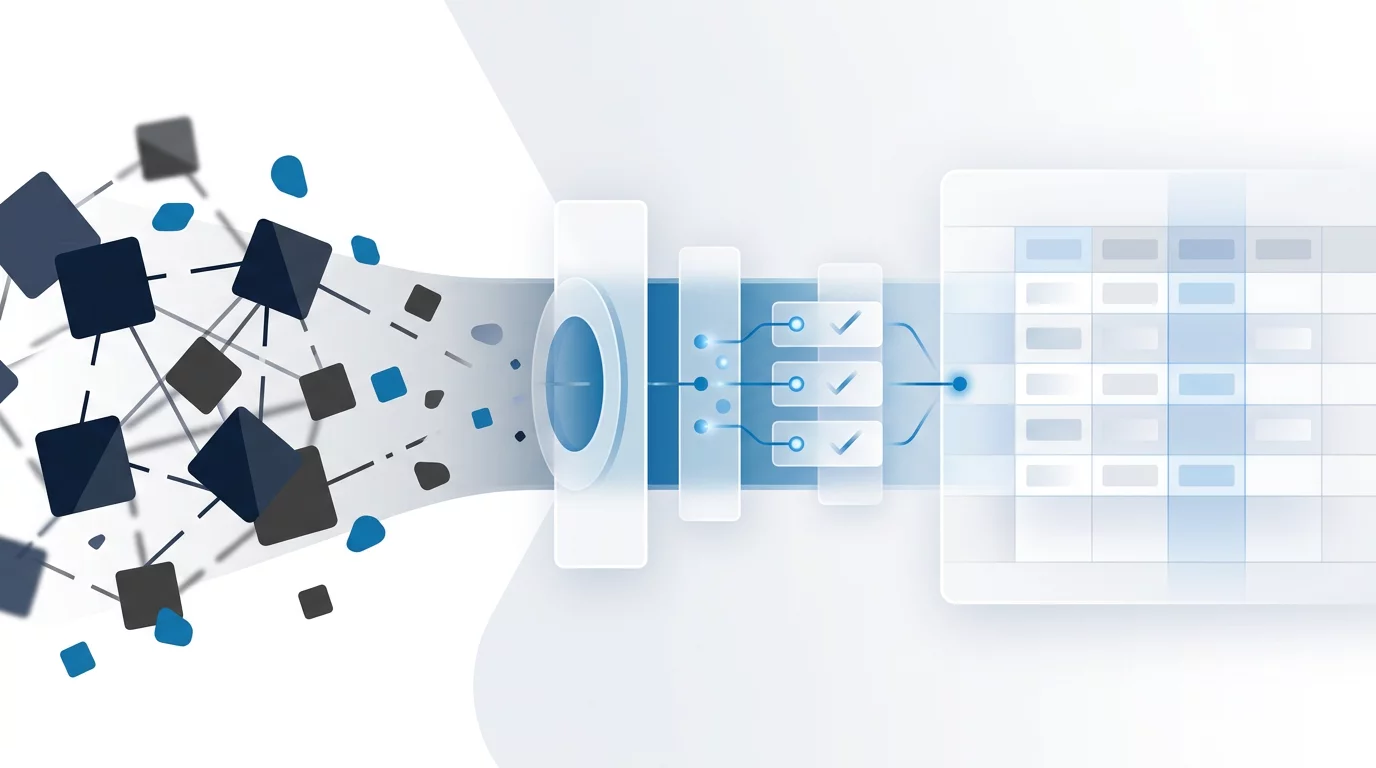
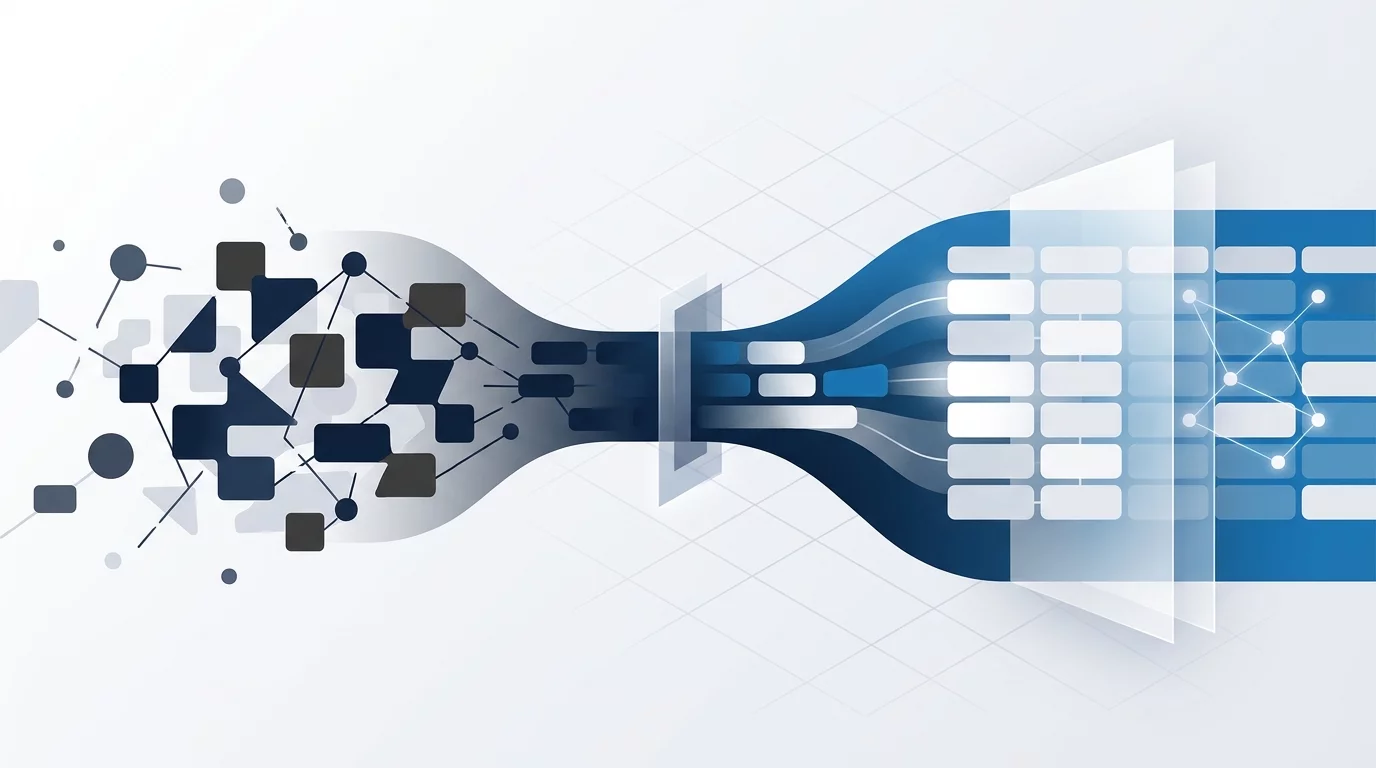
AI-powered enrichment goes much further. Instead of simply retrieving predefined fields, machine learning algorithms analyze dozens of sources simultaneously — LinkedIn, company websites, social networks, public filings, review platforms — to build a 360° view of each prospect. They continuously learn from patterns, detect inconsistencies, and update records proactively.
The core difference: traditional enrichment is reactive (you request, you receive), while AI enrichment is dynamic (data self-corrects and self-completes over time).
In practice, for a BDR prospecting 300 accounts per month, this means fewer email bounces, more relevant outreach context, and significantly less time spent on manual qualification. Research shared by Growleads shows that B2B teams leveraging AI-driven enrichment see sales cycles shrink by 30% and conversion rates improve by 10%.
Now that the stakes are clear, let’s break down which machine learning techniques are actually powering these results.
The 5 machine learning techniques applied to B2B enrichment
1. Anomaly detection for data validation
Supervised machine learning models are trained on millions of historical data points to distinguish a valid email from a suspicious one, a properly formatted phone number from a fake, an active company from a dissolved one.
The algorithm compares each data point against patterns in its training dataset. An email in the format firstname.lastname@domain.com scores differently from a generic contact@domain.com. A French mobile number following the E.164 standard scores differently from an incomplete or malformatted entry.
This real-time validation dramatically reduces hard bounces in your cold email campaigns — with a direct positive impact on deliverability and sender reputation.
2. Natural Language Processing (NLP) to parse profiles
NLP allows enrichment tools to read and understand unstructured text: LinkedIn bios, company descriptions, press releases, job postings.
For example, an NLP algorithm can analyze a company’s recent job listings to infer that it’s in a phase of rapid growth or has just adopted a new CRM — valuable buying signals that help you reach out at exactly the right moment.
3. Predictive scoring and AI lead scoring
Machine learning excels at prediction. By analyzing the characteristics of your existing customers (firmographic, technographic, behavioral), a scoring model learns its own similarity criteria to identify prospects that best match your ICP (Ideal Customer Profile).
Unlike traditional lead scoring — which relies on manually defined static rules (“if company size > 50 and industry = SaaS, then score = 80”) — AI scoring adjusts dynamically based on observed outcomes. If companies with 20–50 employees consistently convert better than those with 50–100 in your data, the model learns and incorporates that automatically.
4. Fuzzy matching and intelligent deduplication
A classic B2B database problem: the same contact or company appears under multiple variations. “Acme Corp,” “ACME Corporation,” “Acme Corp.” — three separate entries pointing to the same entity.
Machine learning-based fuzzy matching algorithms detect these duplicates by calculating a similarity score, then intelligently merge entries while preserving the most complete and up-to-date data.
5. Predictive enrichment via similarity models
Beyond filling in missing fields, some AI models go a step further: they predict information that isn’t directly available. Based on observable signals (industry, size, tech stack, funding history), a model can estimate likely revenue, marketing budget, or propensity to adopt a new tool.
This type of predictive enrichment is particularly valuable for segmentation and personalization of outbound sequences.
These five techniques form the technical foundation of AI enrichment. Let’s now look at how to apply them in a concrete B2B workflow.
How to integrate AI enrichment into your prospecting workflow
Integrating AI into a data enrichment workflow doesn’t require engineering resources. Most modern tools expose these capabilities through no-code interfaces that work directly inside your existing tools.
Step 1: Build your raw prospect list
Everything starts with a list of contacts or companies — sourced from LinkedIn Sales Navigator, a web form, a webinar attendee list, or a CRM export. The key: have at least one identifier per entry (name + company, LinkedIn URL, or domain).
Expected output: A raw list with partial data — that’s perfectly normal. That’s exactly what AI enrichment will complete.
Step 2: Automatically enrich missing attributes
This is where machine learning comes in. The enrichment tool cross-references your identifiers against its data sources to fill in the blanks: professional email, phone number, job title, tech stack, firmographic data (industry, headcount, location, founding date, funding rounds).
With Derrick, this step happens natively in Google Sheets through dedicated functions like the LinkedIn Profile Scraper, Lead Email Finder, or Website Tech Lookup — no CSV exports or complex setup required.
Expected output: A database that’s 80–90% complete, depending on the quality of your starting identifiers.
Step 3: Score and segment with AI
Once data is enriched, it’s time for intelligent qualification. LLM-based tools (OpenAI, Claude) can score each lead against your custom ICP criteria or automatically generate segments based on available attributes.
Derrick natively offers Ask OpenAI, Ask Claude, AI Lead Scoring, and AI Segmentation functions to automate this step directly in Google Sheets. An SDR can, for example, prompt the AI to score each lead on a 1–10 scale based on ICP fit — with a natural language justification for each score.
Related article →How to use Ask OpenAI in Google Sheets
Learn how to automate lead scoring and qualification with AI directly in your spreadsheets.
Expected output: A prioritized list with the hottest leads at the top, ready to contact first.
Step 4: Personalize outreach with enriched data
Enriched data doesn’t just help with qualification — it fuels personalization in your cold email sequences. A lead whose AI profile flagged them as a HubSpot user who just closed a Series A round gets a very different message than a lead at an SMB running a homegrown CRM.
This context-driven personalization, made possible by AI enrichment, directly correlates with reply rates. According to McKinsey, teams combining personalization with generative AI are 1.7x more likely to gain market share.
Real-world use cases for AI enrichment in B2B
Use case 1: The SDR prospecting at scale
Mike is an SDR at a SaaS startup. Every week, he receives a list of 200 leads pulled from Sales Navigator — names, companies, LinkedIn URLs, and nothing else.
With an AI enrichment workflow, he gets validated professional emails, direct phone numbers, tech stack data, and an automated ICP score for each contact — in under 20 minutes. He only sends sequences to leads scored 7/10 or higher, multiplying his reply rate without increasing send volume.
Use case 2: The Sales Ops cleaning the CRM
Sarah, Sales Ops at a scale-up, notices that 30% of HubSpot contacts have outdated or incomplete data. According to Veridion, nearly 75% of B2B contact data becomes stale within a year — and poor data quality costs organizations an average of $12.9 million annually.
She uses an AI enrichment tool to re-qualify the entire database: job title updates, email validation, completion of missing firmographic fields. Within a day, her CRM is back above 90% completion.
Use case 3: The Growth Marketer segmenting campaigns
Emma runs outbound campaigns at a lead gen agency working with multiple clients. She needs to segment lists of 5,000 contacts according to different ICP criteria for each client. Doing this manually would take weeks.
With the generative AI built into her enrichment tool, she writes segmentation rules in plain English (“French SMBs in the retail sector with 10–50 employees using Shopify”), and the AI segments the list automatically in minutes.
AI enrichment and GDPR: what you need to know
Using AI to enrich data doesn’t remove your GDPR obligations. A few key points to keep in mind.
Legal basis: Enriching professional contact data typically relies on legitimate interest (Art. 6.1.f GDPR), provided it’s properly documented and doesn’t override the rights of the individuals concerned.
Data minimization: AI can enrich a contact with 50+ attributes, but the minimization principle means you should only collect what’s necessary for your stated purpose (B2B prospecting, recruitment, etc.).
Transparency: Individuals whose data has been enriched via third-party sources have a right to be informed. If you use enrichment tools, your privacy policy should reflect that.
Data sources: Some AI enrichment tools rely on public data (LinkedIn, company websites); others use proprietary databases. Make sure your provider is itself GDPR-compliant. For a deeper dive on the topic, check out our article on cold email and GDPR compliance.
In the UK, the same principles apply under the UK GDPR, overseen by the ICO.
Best practices to maximize AI enrichment quality
1. Start with clean data — garbage in, garbage out
Machine learning can’t work miracles on low-quality input. If your starting identifiers are approximate (misspelled names, wrong domains), match rates will be low. Always run a cleaning and normalization pass before enriching.
2. Define your ICP clearly before scoring
AI scoring is only as good as the criteria it’s trained on. If you can’t describe your ICP precisely — industry, size, region, tech stack, buying signals — the model can’t do it for you. Take the time to formalize these criteria before configuring your scoring rules.
3. Validate emails in real time, not in batch
Post-enrichment batch validation is a common mistake. Data sources age quickly — an email that’s valid today can become a hard bounce six months from now. Prioritize tools that validate in real time at the point of use, not just at enrichment time.
4. Combine multiple sources to maximize match rates
No single AI enrichment tool covers 100% of contacts. Best results come from combining sources: LinkedIn for profile data, third-party firmographic data for company info, and web enrichment for tech stack and buying signals.
5. Schedule regular data refresh cycles
Enrichment isn’t a one-time event. Plan re-enrichment cycles every 3–6 months (depending on volume) to keep your database fresh and benefit from AI-driven updates on job changes, technology shifts, and headcount evolution.
Which AI enrichment tools are right for B2B?
The B2B data enrichment tools market has expanded significantly with AI integration. Here are the main categories:
Native Google Sheets tools like Derrick combine enrichment (email, phone, firmographics, LinkedIn) with generative AI (scoring, segmentation, profile summaries) directly inside the spreadsheet. Ideal for teams who want a simple workflow without a complex stack.
Data orchestration platforms like Clay let you chain multiple enrichment sources with AI for highly customizable workflows. More powerful, but also more complex to configure — suited to growth engineers.
Sales intelligence platforms like ZoomInfo or Cognism maintain their own databases, continuously enriched by AI, with intent signals included. Better suited to teams with larger budgets.
Specialized tools (email verification, phone finder, tech lookup) focused on one data type with maximum precision.
For a prospecting team that wants to get started with AI enrichment quickly and without a heavy investment, Derrick remains the most accessible entry point: everything happens in Google Sheets, no technical configuration required, starting at $9/month.
Key takeaways
- AI-powered data enrichment relies on 5 core ML techniques: anomaly detection for validation, NLP for profile parsing, predictive scoring, fuzzy matching, and predictive enrichment.
- 75% of B2B contact data becomes stale within a year — AI is the only realistic way to keep a database current at scale.
- Generative AI (OpenAI, Claude) lets you score and segment lists automatically against your ICP criteria, without manual rules.
- AI enrichment doesn’t remove GDPR obligations: legal basis, data minimization, and transparency remain required.
- For B2B teams without technical resources, native Google Sheets tools offer the best simplicity-to-power ratio.
Conclusion: AI enrichment is a competitive edge you can act on now
AI and machine learning data enrichment is no longer a cutting-edge technology reserved for large enterprises. In 2026, it’s accessible to any sales team — and those who haven’t adopted it yet are falling behind competitors who qualify, score, and personalize at a speed and accuracy that manual processes simply can’t match.
For SDRs, BDRs, and Growth Marketers doing B2B outreach, the question is no longer “should I integrate AI into my enrichment?” but “how do I integrate it as simply as possible into my existing workflows?”
The most direct answer: start with tools that bring AI where you already work.
FAQ
What is AI-powered data enrichment? AI-powered data enrichment uses machine learning algorithms to automatically complete missing information in your prospect databases — emails, phone numbers, firmographic data, buying signals — by pulling from multiple sources in real time.
What’s the difference between traditional and AI enrichment? Traditional enrichment retrieves static data from a single database. AI enrichment cross-references multiple sources simultaneously, validates data, detects anomalies, and updates records dynamically — delivering far superior accuracy and freshness.
Is AI data enrichment GDPR-compliant? Yes, provided you follow the rules: a documented legal basis (typically legitimate interest for B2B prospecting), data minimization, and transparency toward the individuals concerned. Enriched data must correspond to a clearly defined and legitimate purpose.
How does AI lead scoring actually work? The model is trained on the characteristics of your existing customers (firmographic, technographic, behavioral) to identify conversion patterns. It then scores each new lead based on similarity to your best customers — and self-adjusts over time as more outcomes are observed.
Can you do AI enrichment without technical skills? Yes. Tools like Derrick bring AI enrichment natively into Google Sheets, with no API configuration or coding required. Functions like Ask Claude, AI Lead Scoring, and AI Segmentation are accessible in just a few clicks for any commercial profile.
How accurate is AI enrichment compared to manual research? According to IBM, companies using AI for data quality see accuracy improve by more than 40%. Manual enrichment at scale inevitably introduces errors and inconsistencies that AI detects and corrects automatically.

Jonathan Maurin

Related Posts
LinkedIn Email Finder 2026: 12 Tools Compared (Hit Rate, Pricing, Bulk Workflow)
LinkedIn email finder tools compared in 2026: 12 vendors side…
Best multichannel outreach freelancers in Paris in 2026
7 platforms to find a senior multichannel outreach freelancer in…
Best multichannel outreach agencies in France in 2026
7 multichannel outreach agencies in France compared in 2026: ReCom,…
Best cold email freelancers in New York in 2026
7 channels to find a cold email freelancer in New…