

Google scraping has become a cornerstone of modern B2B prospecting. Whether you need to source new leads through targeted boolean queries, enrich your CRM with Google context, or monitor competitors in real-time, each tool has its strengths. With the web scraping market reaching $1.03 billion in 2026 and expected to double by 2030, solutions are multiplying — but not all are created equal.
91% of B2B marketers cite lead generation as their #1 priority, and 58% identify lead quality as their biggest challenge. In this context, intelligent Google scraping enables not only sourcing prospects but qualifying them with actionable context before the first contact.
Here’s our in-depth analysis of the 10 best solutions in 2026, ranked by relevance for different prospecting workflows.
Enrich your leads with Google context
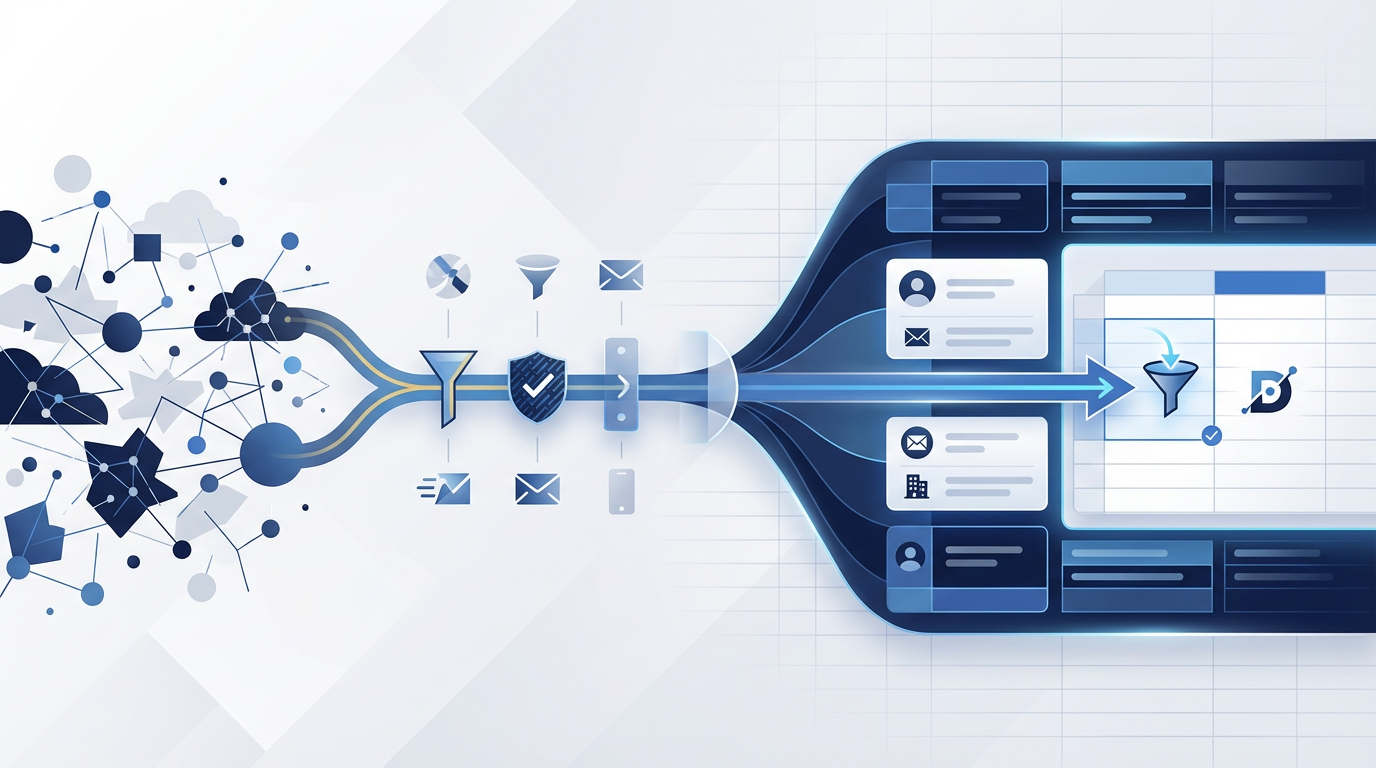
Derrick scrapes Google results and enriches your prospects with emails, phone numbers, and LinkedIn profiles — directly in Google Sheets.

Our Selection Criteria
To establish this ranking, we evaluated each tool against five essential criteria:
1. Ease of use: Native no-code solution vs API requiring technical skills 2. Pricing & scalability: Value for money, pricing transparency, ability to handle high volumes 3. Data quality & freshness: Results accuracy, response time, uptime rate 4. Available integrations: Compatibility with your tech stack (CRM, Google Sheets, automation platforms) 5. Support & documentation: Documentation quality, support responsiveness, active community
These criteria reflect the real needs of sales and marketing teams in 2026, where 69% of companies are increasing their lead generation budgets and 44% already use automation.
Quick Comparison Table
| Rank | Tool | Best for | Starting price | Type |
|---|---|---|---|---|
| 1 | Derrick | Contextual Google Sheets enrichment | €9/month (4000 credits) | No-code all-in-one |
| 2 | Autom.dev | Massive SERP API sourcing | $0.001/search | REST SERP API |
| 3 | SerpAPI | Enterprise reliability, global coverage | $50/month | REST SERP API |
| 4 | Bright Data | Proxy + high-performance scraping | $500/month | Infrastructure + API |
| 5 | Oxylabs | High volume, resilient infrastructure | $499/month | Proxy + SERP API |
| 6 | ScraperAPI | Simplicity, good value | $49/month | Web scraping API |
| 7 | Apify | No-code, general web automation | $49/month | No-code platform |
| 8 | Phantombuster | Multi-platform, LinkedIn automation | €56/month | Cloud automation |
| 9 | ScrapingBee | JavaScript rendering, dynamic sites | $49/month | Web scraping API |
| 10 | DataForSEO | SERP data + SEO analytics | $50/month | SERP + SEO API |
1. Derrick – Native Google SERP Enrichment in Google Sheets 🥇
Best for: SDRs, growth marketers, and sales ops who want to enrich existing leads directly in Google Sheets
Derrick stands out with its unique all-in-one approach: it doesn’t just scrape Google results — it combines SERP scraping, email/phone enrichment, and real-time validation, all natively in Google Sheets without a single line of code.
Two exclusive Google SERP features
First page organic results: Retrieves the top 10 organic Google results for each lead. Perfect for qualifying prospects by viewing their web presence, recent mentions, or company news.
Top organic result: Extracts only the #1 Google result. Ideal for fast workflows where you just need the most relevant link (official website, LinkedIn page, press article).
Real-world use case
Example: Sarah, SDR at a B2B SaaS startup, imports 200 LinkedIn profiles from Sales Navigator into Google Sheets. With one click, Derrick:
- Scrapes verified professional emails and phone numbers for each prospect
- Retrieves the top 10 Google results for each target company
- Identifies recent news (funding rounds, hiring, expansion)
- Validates emails in real-time
Result: Sarah has actionable context to personalize her cold emails. Instead of a generic message, she can mention the company’s recent $5M funding round or their expansion to a new city — identified through Google scraping.
This B2B data enrichment workflow increases email open rates by 2-3x compared to generic emails.
Strengths
- All-in-one workflow: SERP + enrichment + validation in one tool
- 100% native Google Sheets: No CSV export, no API configuration
- Rollover credits: Unused credits carry over (unique in the market)
- Built-in AI: Claude and ChatGPT available for scoring and segmentation
- Generous free plan: 200 credits/month without credit card
- 50+ enrichment features: Discover all B2B prospecting features
Weaknesses
- Limited volume compared to pure SERP APIs (max 100K credits/month)
- Less suitable for massive initial sourcing (better for enriching existing lists)
- Higher cost per search than pure APIs (but includes complete enrichment)
Detailed pricing
- First result Google: 2 credits = €0.0045/request
- First page Google (10 results): 5 credits = €0.01125/request
- Small plan: 4000 credits for €9/month
- Medium plan: 10,000 credits for €20/month (-10%)
- Large plan: 25,000 credits for €47.50/month (-15%)
- XL plan: 100,000 credits for €175/month (-20%)
💡 Bonus: Each credit also works for other features (Email Finder, Phone Finder, LinkedIn Scraper), making pricing very competitive if you need a complete workflow.
Verdict: Best choice if you already have leads (LinkedIn, CRM, lists) and want to enrich them with Google context + emails/phones in a simple, fluid workflow.
2. Autom.dev – Ultra-fast and scalable SERP API 🥈
Best for: Developers, data teams, and growth hackers doing massive sourcing via boolean search
Autom.dev is a SERP API that excels in execution speed and ultra-aggressive pricing. It supports Google, Bing, Brave, and Perplexity, with millisecond response times and infrastructure designed to handle massive volumes.
Why Autom.dev dominates initial sourcing
Unlike Derrick which enriches existing leads, Autom.dev is built to create your prospect list from scratch via targeted boolean queries.
Example query:
site:linkedin.com/in/ intitle:"CTO" "Paris" "SaaS" "AI"
This query returns all LinkedIn profiles of CTOs in Paris working in SaaS/AI. Autom.dev scrapes it in seconds and returns structured URLs you can then enrich with Derrick.
Real-world use case
Example: Mike, founder of a lead generation agency, uses Autom.dev to source 10,000 prospects/week:
- He defines 20 boolean queries targeting different ICPs
- Autom.dev scrapes Google at scale (cost: ~$10/10K searches)
- He exports results to Google Sheets
- He enriches with Derrick (emails, phones, validation)
- He launches cold email campaigns
Total cost: ~$50/week for 10,000 qualified leads — unbeatable.
Strengths
- Unbeatable pricing: $0.001/search (~€0.00092), 10-20x cheaper than alternatives
- Multi-engine: Google, Bing, Brave, Perplexity in one API
- Speed: Millisecond response times, 99.9% uptime
- Excellent documentation: Python, Node.js, PHP SDKs with clear examples
- Integrations: Native n8n, Pipedream, Clay, Make
Weaknesses
- Requires technical skills (REST API, no native no-code version)
- No integrated enrichment (SERP data only, no emails/phones)
- Learning curve for non-developers
Pricing
- Pay-per-request: $0.001/search (~€0.00092/search)
- 1000 free requests to test
- No monthly fees, pay what you use
- Transparent billing, no hidden fees
💡 Note: Autom.dev pricing is unbeatable for pure sourcing, but don’t forget to add enrichment cost afterward (emails, phones) with a tool like Derrick.
Verdict: Best choice if you’re starting from zero and need to source leads massively via boolean search. Ideal workflow: Autom.dev (sourcing) → Derrick (enrichment).
3. SerpAPI – The Enterprise Market Standard
Best for: Companies seeking reliability, stability, and global coverage
SerpAPI is the market’s “safe choice.” Created in 2017, it built its reputation on infrastructure reliability and structured data quality. Used by thousands of companies worldwide, it’s the default choice when you need enterprise guarantees.
Strengths
- Global coverage: 100+ countries, 50+ languages, all local SERPs
- Ultra-structured JSON: Perfectly parsed data, easy to exploit
- Proven stability: Mature infrastructure, minimal downtime
- Responsive support: Complete documentation, available support team
- Advanced features: Google Shopping, Images, News, Maps, etc.
Weaknesses
- More expensive than alternatives ($50-150/month vs $0.001/req for Autom.dev)
- Sometimes high latency (seconds vs milliseconds for Autom.dev)
- Complex admin interface for beginners
Pricing
- Basic plan: $50/month (5,000 searches)
- Business plan: $150/month (20,000 searches)
- Custom plans for enterprise volumes
Verdict: Choose SerpAPI if reliability and support are priorities, and pricing isn’t your main constraint.
4. Bright Data – Proxy infrastructure + high-performance scraping
Best for: Enterprises with massive, complex needs (millions of requests/month)
Bright Data (formerly Luminati) is the world leader in proxy and scraping solutions. Their network of 72+ million residential IPs bypasses the most sophisticated anti-bot protections. It’s the ultimate “enterprise-grade” solution.
Strengths
- Massive proxy network: 72M+ residential IPs, automatic rotation
- Advanced anti-blocking: Bypasses CAPTCHAs and anti-bot protections
- SERP + web scraping: Not limited to Google, scrapes any website
- Legal compliance: GDPR-compliant infrastructure, legal documentation
Weaknesses
- Very expensive (from $500/month, often $2000-5000/month in reality)
- High technical complexity
- Overkill for most B2B prospecting use cases
Pricing
- From $500/month (but real pricing often $2000-5000/month)
- Model based on bandwidth + requests
- Enterprise quote required
Verdict: Only if you have massive enterprise needs (>1M requests/month) and substantial budget.
5. Oxylabs – High volume, resilient infrastructure
Best for: Data teams with high-volume needs and reliability requirements
Oxylabs positions itself as a direct alternative to Bright Data, with a similar proposition: proxy network + SERP API + web scraping. Their differentiation: slightly more accessible pricing and simpler onboarding.
Strengths
- Scalable infrastructure: Designed to absorb high volumes
- Dedicated SERP API: Simpler access than Bright Data
- Residential proxy: 102M+ IPs to bypass blocks
- Clear documentation: Better onboarding than Bright Data
Weaknesses
- High price ($499/month minimum)
- Still overkill for SMEs/startups
- Fewer advanced features than Bright Data
Pricing
- Starter plan: $499/month
- Business plans: On quote (typically $1000-3000/month)
Verdict: Alternative to Bright Data if you need massive infrastructure with simpler onboarding.
6. ScraperAPI – Simplicity and good value
Best for: Developers who want a simple API without worrying about proxies
ScraperAPI takes a different approach: instead of selling proxies separately, they handle everything in the backend. You make an API request, they return the HTML — without worrying about IP rotation, CAPTCHAs, or JavaScript rendering.
Strengths
- Extreme simplicity: One API, zero proxy configuration
- Good value: $49/month for 100K requests
- JavaScript rendering: Handles dynamic sites automatically
- Fast onboarding: Operational in 10 minutes
Weaknesses
- Not SERP specialized (general web scraping)
- Less performant than dedicated SERP APIs for Google
- Limited support on basic plan
Pricing
- Hobby plan: $49/month (100K API credits)
- Startup plan: $149/month (500K API credits)
- Business plans: On quote
Verdict: Good choice for simple API for general web scraping, less suitable if you specifically target Google SERP.
7. Apify – No-code platform for web automation
Best for: Marketers and growth hackers without dev skills who want to automate
Apify differentiates with its no-code approach: marketplace of “actors” (pre-built scripts) you can launch with one click. Need to scrape Google Maps, extract emails from websites, or monitor prices? There’s an actor for that.
Strengths
- Rich marketplace: 1500+ ready-to-use actors
- No-code approach: Launch scrapes without coding
- Active community: Many tutorials and examples
- Integrations: Native Zapier, Make, Google Sheets
Weaknesses
- Less specialized in B2B prospecting than Derrick or Autom.dev
- Pricing can climb quickly with volumes
- Variable performance depending on actors used
Pricing
- Free plan: $5/month compute (limited)
- Starter plan: $49/month
- Team plan: $499/month
Verdict: Interesting for diversifying web automations, but not optimal for Google scraping specifically.
8. Phantombuster – Multi-platform automation (LinkedIn, Twitter, etc.)
Best for: Social selling and multi-channel prospecting
Phantombuster is known for its “Phantoms” (automations) on LinkedIn, Twitter, Instagram, etc. They also have Phantoms for scraping Google, but it’s not their core focus.
Strengths
- LinkedIn automation: Excellent for scraping Sales Navigator
- Multi-platform: Twitter, Instagram, Facebook, Google
- Cloud-based: Runs 24/7 without your computer
- Easy to use: Intuitive no-code interface
Weaknesses
- Google scraping not their specialty (better on LinkedIn)
- High pricing for what it is (€56/month for basic usage)
- LinkedIn ban risk if intensive usage
Pricing
- Starter plan: €56/month
- Pro plan: €128/month
- Team plan: €352/month
Verdict: Choose Phantombuster if you want to automate LinkedIn AND other social networks, but not optimal for Google SERP only.
9. ScrapingBee – JavaScript rendering, dynamic sites
Best for: Scraping sites with heavy JavaScript (SPAs, React/Vue sites)
ScrapingBee specializes in JavaScript rendering: they use a real browser (headless Chrome) to execute JS and return complete HTML. Essential for scraping modern sites (React, Vue, Angular) where content loads dynamically.
Strengths
- Headless browser: Handles JavaScript like a real browser
- Effective anti-blocking: IP rotation + CAPTCHA handling
- Simple API: Easy to integrate
- Competitive pricing: $49/month to start
Weaknesses
- Not specialized in Google SERP (general web scraping)
- Slower than SERP APIs (browser rendering = overhead)
- Fewer advanced features than Bright Data/Oxylabs
Pricing
- Freelance plan: $49/month (150K credits)
- Startup plan: $125/month (500K credits)
- Business plans: On quote
Verdict: Excellent for scraping modern sites with heavy JS, less optimal for Google SERP where dedicated APIs are faster.
10. DataForSEO – SERP data + SEO analytics
Best for: SEO agencies and marketers combining SERP scraping and SEO analysis
DataForSEO combines SERP API and SEO analysis tools (rankings, backlinks, keywords). If you do both prospecting and SEO, it’s an interesting all-in-one solution.
Strengths
- SERP + SEO tools: Two tools in one
- Transparent pricing: Clear pay-per-request
- Global coverage: All local SERPs
- Well-documented API: Easy to integrate
Weaknesses
- Limited B2B prospecting features vs Derrick/Autom.dev
- Less intuitive interface than competitors
- Sometimes slow support
Pricing
- Pay-as-you-go: $0.0005/SERP request (very competitive)
- Starter plan: $50/month
- Custom plans for volumes
Verdict: Good choice if you combine prospecting and SEO, otherwise more specialized tools will be more effective.
How to Choose the Right Google Scraping Tool for Your Prospecting
The choice mainly depends on your workflow and starting point. Here’s our decision framework:
If you already have leads (LinkedIn, CRM, Sales Navigator)
→ Choose Derrick
Why: You don’t need sourcing, but enrichment. Derrick scrapes Google AND enriches with emails/phones/LinkedIn in a fluid workflow.
Typical workflow:
- Import your leads into Google Sheets
- Launch Derrick enrichment (Google SERP + Email + Phone)
- Qualify with retrieved Google context
- Launch cold email campaigns with personalization
Cost: €9/month to start (Small plan 4000 credits)
If you’re starting from zero and need massive sourcing
→ Choose Autom.dev
Why: You need to CREATE your list via boolean search. Autom.dev is 10-20x cheaper than alternatives for massive sourcing.
Typical workflow:
- Define your targeted boolean queries
- Autom.dev scrapes Google at scale (10K searches = ~$10)
- Export to Google Sheets
- Enrich with Derrick (emails, phones, validation)
- Launch campaigns
Cost: ~$0.001/search for sourcing + €9/month Derrick for enrichment
If you need enterprise reliability and global coverage
→ Choose SerpAPI
Why: Mature infrastructure, responsive support, SLA guarantees. The “safe choice” for large companies.
Use cases: Multi-country competitor monitoring, large-scale SERP data aggregation, strict compliance.
Cost: From $50/month (5000 searches)
If you’re looking for no-code multi-platform solution
→ Choose Apify or Phantombuster
Why: Marketplace of ready-to-use automations, no coding needed. Ideal if you also automate LinkedIn, Twitter, etc.
Cost: €49-56/month to start
If you have massive enterprise needs (>1M requests/month)
→ Choose Bright Data or Oxylabs
Why: Massive proxy infrastructure, advanced anti-blocking, ability to absorb very high volumes.
Cost: $500-5000/month depending on volumes
The Ideal Workflow: Combining Sourcing and Enrichment
Most high-performing sales teams in 2026 don’t settle for one tool, but combine initial sourcing + contextual enrichment:
Recommended complete workflow
Step 1: Massive sourcing with Autom.dev
- Define your ICPs and create targeted boolean queries
- Example:
site:linkedin.com/in/ intitle:"Head of Sales" "Paris" "B2B SaaS" "100-500 employees" - Autom.dev scrapes Google and returns LinkedIn URLs
- Cost: ~$10/10K searches
Step 2: Enrichment with Derrick
- Import LinkedIn URLs into Google Sheets
- Derrick automatically extracts:
- Verified professional emails in real-time
- Phone numbers
- Complete company info
- Google context (news, web presence)
- Learn more about how to scrape LinkedIn effectively
- Cost: €9/month for 4000 enrichments
Step 3: AI qualification (optional)
- Use Ask Claude or Ask OpenAI in Derrick
- Automatically score your leads according to your criteria
- Segment by priority level
Step 4: Campaign launch
- Personalize cold emails with Google context
- “I saw that [company] just raised $5M…” (info found via scraping)
- Open rates 2-3x higher than generic emails
Complete workflow ROI
Monthly investment:
- Autom.dev: ~$50/month (50K searches)
- Derrick: €20/month (Medium plan 10K credits)
- Total: ~$70/month
Result:
- 50,000 prospects sourced
- 10,000 leads enriched with emails/phones/context
- Email conversion rate: 2-5% (200-500 qualified leads)
- Cost per qualified lead: $0.14-0.35
Compare with:
- LinkedIn Sales Navigator: $1200/year (~$100/month) for 0 enriched leads
- Database purchase: $0.50-2/qualified lead (variable quality)
- Manual SDR: $3000-5000/month for ~500 qualified leads
The Autom.dev + Derrick workflow offers the best ROI in the market for scalable B2B prospecting.
Top 10 LinkedIn Scraping Tools for B2B Prospecting
Discover how to automate lead extraction from LinkedIn Sales Navigator with the best market solutions.
Legal Aspects and Scraping Compliance
⚠️ Important point: Scraping public data is generally permitted, but you must follow certain rules:
What’s allowed
- Scraping Google search results (public data)
- Extracting publicly visible information from websites
- Using data for B2B prospecting (legitimate interest)
- Storing data for internal use
What requires attention
- GDPR: If you target European prospects, you must:
- Have a legal basis (legitimate interest for B2B prospecting)
- Allow rights exercise (access, rectification, deletion)
- Limit retention period (generally 3 years for prospects)
- Inform people about collection (in your privacy policy)
- Robots.txt: Respect website directives
- Rate limiting: Don’t overwhelm servers (IP blocking risk)
- ToS: Some platforms prohibit scraping in their terms
Best practices
- Throttle your requests: Space them by a few seconds
- Use rotating proxies: Avoid IP blocks
- Scrape only what’s necessary: Limit to data you need
- Document your approach: Keep track of GDPR legal bases
- Respect opt-outs: If a prospect requests deletion, execute
Most tools in this top 10 (Derrick, Autom.dev, SerpAPI) are designed to respect these rules. Bright Data and Oxylabs even provide legal documentation to support you.
2026 Trends: Where Google Scraping for Prospecting is Heading
The scraping market evolves rapidly. Here are the major trends shaping 2026:
1. Integrated generative AI
Tools like Derrick now natively integrate Claude and ChatGPT to:
- Automatically qualify leads
- Generate profile summaries
- Score according to custom criteria
- Create intelligent segments
According to recent research, 79% of sales teams using AI report shorter sales cycles and better profitability.
2. Real-time contextual enrichment
Google scraping is no longer limited to URLs: modern tools analyze context (recent news, funding rounds, team changes) to personalize commercial approach.
Example: Derrick detects a company just announced expansion → sales rep can mention “I saw you’re opening an office in Lyon, congratulations!” in their cold email.
3. Compliance by design
With GDPR tightening and new regulations coming (AI Act, DMA), tools integrate compliance from design:
- Consent tracking
- Automated right to be forgotten
- Legal basis documentation
- Audit trails
4. Usage-based vs fixed subscription pricing
The pay-per-request model (like Autom.dev) gains ground against fixed monthly subscriptions. Companies prefer paying only what they use, especially during economic uncertainty.
5. Tool consolidation
Instead of juggling 5-10 tools (SERP API + Email Finder + Phone Finder + Validator + CRM), teams seek all-in-one platforms like Derrick that centralize the entire workflow in Google Sheets.
According to our data, 44% of companies already use automation for lead generation, and this figure should reach 70% by end of 2026.
Key Takeaways
- Google scraping has become a pillar of modern B2B prospecting, with a market doubling by 2030
- Derrick excels at enriching existing leads with Google context + emails/phones in a native Google Sheets workflow
- Autom.dev dominates sourcing massively via ultra-fast SERP API with unbeatable pricing
- The ideal workflow combines initial sourcing (Autom.dev) + contextual enrichment (Derrick) for optimal ROI
- 91% of B2B marketers cite lead generation as #1 priority, and scraping tools address both major challenges: volume AND quality
- GDPR compliance is essential: scrape public data, respect people’s rights, document legal bases
Conclusion: Where to Start Now
Google scraping is no longer a niche technique reserved for developers — it’s become a standard in modern B2B prospecting. With 81% of US retailers already using automated price scraping, and 40% of B2B SaaS companies scraping prospect data, not adopting these tools in 2026 means shooting yourself in the foot.
Our recommendation based on your situation:
Just starting? → Begin with Derrick (free plan 200 credits/month) to enrich your first LinkedIn leads with Google context + emails. Simple workflow, immediate results, no technical skills required.
Scaling up? → Combine Autom.dev (massive sourcing) + Derrick (enrichment) for best market ROI. Budget: ~$70/month for 50K sourced prospects and 10K enriched leads.
Enterprise? → SerpAPI or Bright Data depending on volumes and reliability requirements. Budget: $500-5000/month depending on volumes.
What matters isn’t using the most expensive or sophisticated tool, but the one that best integrates into your workflow and helps you reach your lead generation goals.
In 2026, intelligent Google scraping is no longer a “nice to have” — it’s a “must have” to stay competitive in the race for the best prospects.
Start enriching your leads with Derrick
Try Derrick free for 30 days. 200 credits offered, no credit card required. Complete workflow in Google Sheets in 5 minutes.
FAQ
What’s the difference between Derrick and Autom.dev?
Derrick enriches existing leads with Google context, emails, phone numbers, and LinkedIn profiles — directly in Google Sheets without code. Autom.dev sources new leads from scratch via SERP API and boolean queries. Both are complementary: Autom.dev to create your list, Derrick to enrich and qualify it.
Can you use multiple tools together?
Absolutely, and it’s even recommended to maximize ROI. Ideal workflow: Autom.dev for massive sourcing via boolean search → Export to Google Sheets → Derrick to enrich with emails/phones/context → AI qualification → Cold email campaigns. Total cost: ~$70/month for 10K enriched leads.
Is Google scraping legal in the US and EU?
Scraping public data is generally permitted, but you must respect GDPR for B2B prospecting. Accepted legal bases: legitimate interest for B2B-to-B prospecting (article 6.1.f GDPR). Obligations: inform people via privacy policy, allow rights exercise, limit retention to 3 years maximum. Tools like Derrick and Autom.dev are designed to facilitate compliance.
What volume can you reach with Derrick?
Derrick goes up to 100,000 credits/month on the XL plan (€175/month). For higher volumes, it’s more cost-effective to combine Autom.dev for initial sourcing (unlimited volume) and Derrick for enriching the most promising leads. This hybrid workflow handles 50K+ prospects/month while controlling costs.
Do SERP APIs provide real-time results?
Yes, most (Autom.dev, SerpAPI, Oxylabs) return current Google results in real-time with latency from milliseconds to a few seconds maximum. Derrick also refreshes data with each request to guarantee up-to-date context on your prospects.
How to avoid being blocked by Google when scraping?
Use dedicated SERP APIs like Autom.dev or SerpAPI that automatically handle IP rotation, CAPTCHAs, and rate limiting. If scraping directly, follow these best practices: throttle requests (max 1-2/second), use rotating proxies, vary user-agents, respect robots.txt. Professional APIs have >99% success rates thanks to optimized infrastructure.
Can Derrick replace LinkedIn Sales Navigator?
For importing Sales Navigator lists, yes: Derrick imports your Sales Navigator searches with 1 click into Google Sheets (native feature). For advanced search with LinkedIn filters, no: Sales Navigator remains superior. Optimal workflow: Sales Navigator to define your ICP and search → Derrick to import + enrich with emails/phones/Google context. Savings: Sales Navigator costs $100/month, Derrick only €9-20/month for enrichment.
What’s the real cost per qualified lead with these tools?
With Autom.dev + Derrick workflow: $0.14-0.35/qualified lead. Details: Autom.dev sourcing (50K searches) = $50 + Derrick enrichment (10K credits) = €20 = ~$70 total. If 2-5% convert (200-500 qualified leads), cost = $0.14-0.35/lead. Compare: database purchase ($0.50-2/lead, variable quality), manual SDR ($6-10/lead), LinkedIn Ads ($20-50/lead).

Jonathan Maurin


Related Posts
LinkedIn Email Finder 2026: 12 Tools Compared (Hit Rate, Pricing, Bulk Workflow)
LinkedIn email finder tools compared in 2026: 12 vendors side…

Best multichannel outreach freelancers in Paris in 2026
7 platforms to find a senior multichannel outreach freelancer in…

Best multichannel outreach agencies in France in 2026
7 multichannel outreach agencies in France compared in 2026: ReCom,…

Best cold email freelancers in New York in 2026
7 channels to find a cold email freelancer in New…